
Columbia City Directory Holdings by Year
Columbia's historical directory trail is strongest in physical collections. Daniel Boone Regional Library lists printed Columbia volumes from 1936 through 2013, but its run has real issue gaps. Earlier evidence comes from the State Parks East Campus survey, which identifies local volumes from 1907 forward. Treat the date on a volume as an issue date, not proof that a directory was printed every year. For an address question, start with the closest held volume before and after the date in question.
| Collection | Years | Where Held | Access |
|---|---|---|---|
| Columbia address volumes | 1907-1940 publisher trail; 1936-2013 physical run with gaps | DBRL and State Parks survey citations | Check the local guide and consult held volumes in person |
| Telephone directories | 1906-1909; Winter 1935; 1946-2012 with gaps | SHSMO and DBRL | Archive or library research |
| Boone rural residences | 1976, 1982, 1984 | DBRL | Physical local-history collection |
| Newspapers and obituaries | Tribune from 1901; local obituary collection 1938-1965 | DBRL and CoMo Preservation | Microfilm, onsite collection, or focused staff request |
The DBRL historic directories guide documents the shelf holdings and their gaps.
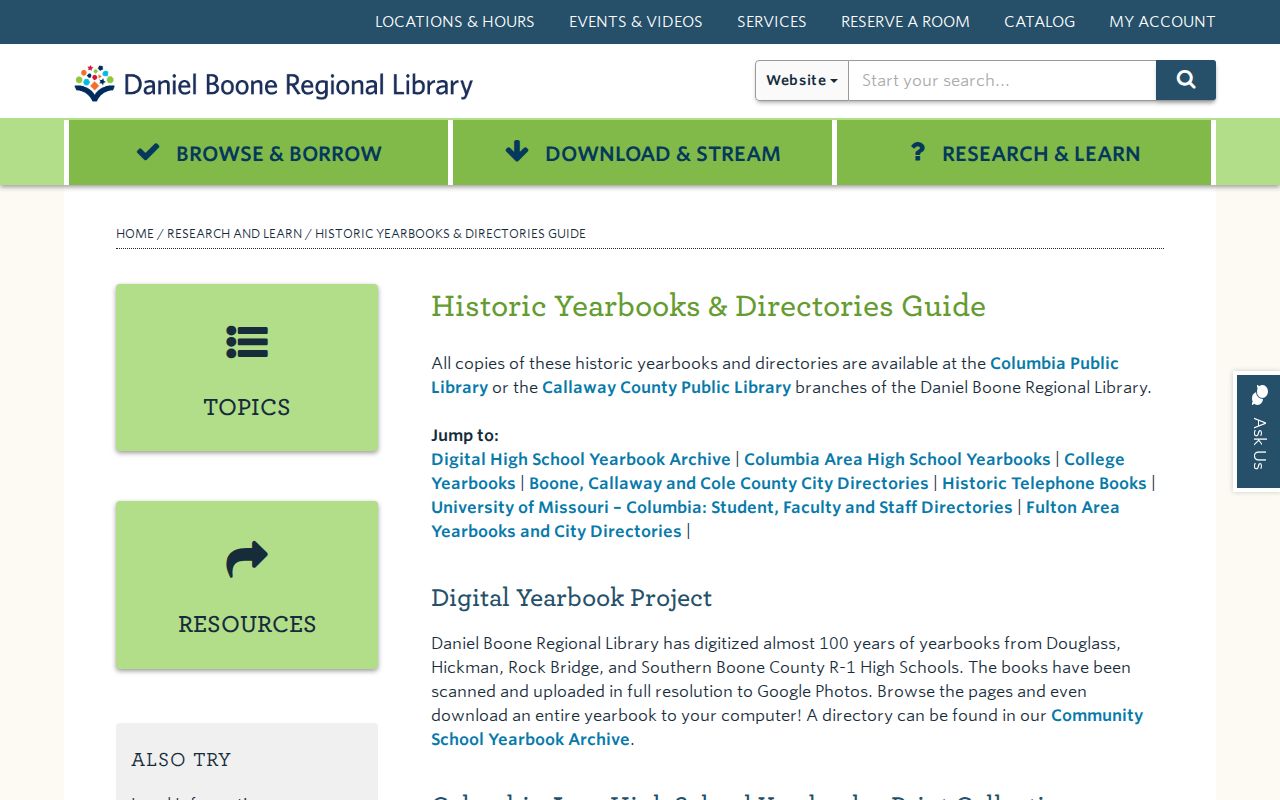
Use the guide as a call-slip and date checklist, not as evidence that every missing year has a surviving local volume. Note: Record the title, publisher, issue year, page, and holding institution with each entry.
Columbia City Directory Publisher Trail
The title page matters in Columbia. The East Campus historic survey cites R. E. Hackman for 1907 and 1909, Quincy and R. E. Hackman for several issues from 1911 through 1917, E. W. Stephens for 1923, Heber Page for 1925-26, R. L. Polk for 1927, James Directory for 1930-31, Herald-Statesman for 1933, Artkraft for 1936, and Polk again for 1940. Searching only for one publisher can therefore miss much of the early run.
- 1907-1909: locate the Hackman references in the historic survey.
- 1911-1917: check the Quincy and Hackman title variants rather than one abbreviated catalog term.
- 1923-1940: follow the publisher changes alongside the issue year.
- Later years: use DBRL's issue list and confirm the exact volume before a visit.
The Missouri Digital Heritage city-directory overview explains why these volumes may include names, addresses, occupations, businesses, forwarding details, and alphabetical person or place indexes. Columbia does not have a confirmed public full-page digitized run, so a search that fails online should move to the library or archive instead of assuming the directory never existed.
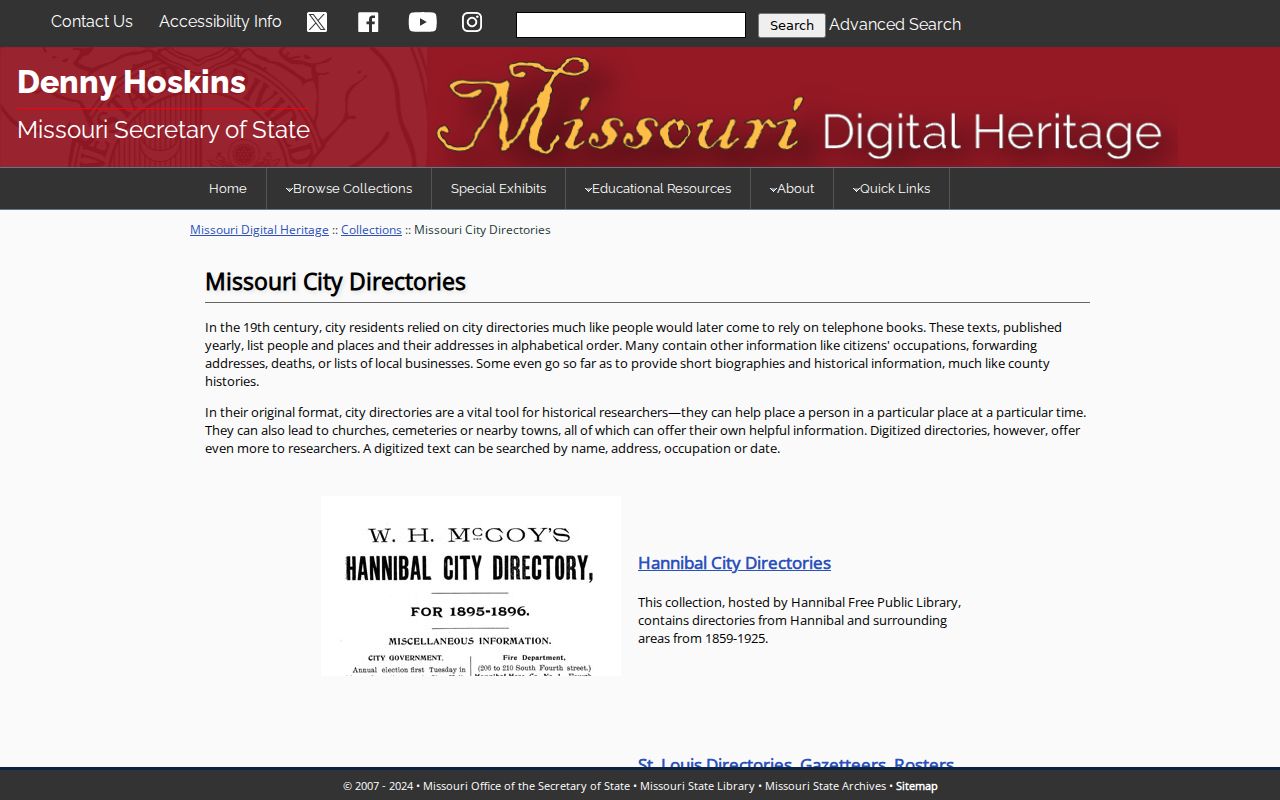
Digital Heritage is useful for understanding directory formats and digitization limits, while Columbia's dated volumes remain a physical-collection task.
Columbia Telephone Volumes Since 1906
Telephone books extend the shelf backward and forward, but they have their own gaps. SHSMO's C0594 Columbia Telephone Exchange Directories collection includes February 1906, February 1907, October 1907, October 1908, and April 1909 volumes with advertising. DBRL lists later telephone issues beginning with Winter 1935 and continuing intermittently into 2012. A telephone listing can add a household or business clue, yet it is still a dated publication rather than a full local roster.
The SHSMO Columbia telephone-directory collection is the appropriate archival route for the early exchange books.
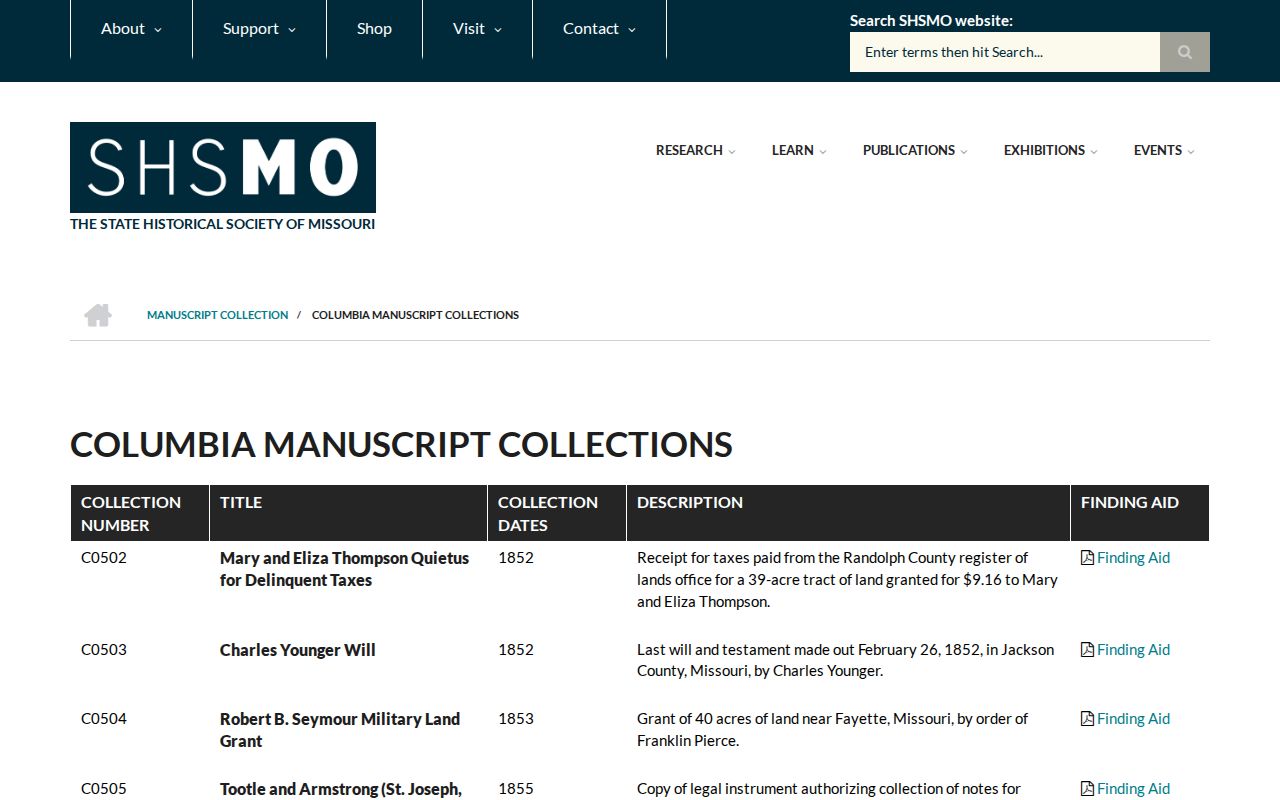
When a surname appears in both a telephone volume and an alphabetical address volume, preserve the wording from each source separately because addresses, initials, and occupations may not match exactly.
Reading a Columbia City Directory Entry
A historic entry is compact and publisher-specific. The underlying physical page may place surname and given name first, then a spouse or household relationship, occupation, employer or business, and street address. Some editions use owner or renter marks, widow notation, telephone information, or a business category. Do not expand a single letter from memory. Read the front matter and abbreviation key in the same volume before assigning meaning to an "h," "r," or other mark.
| Name | Record initials, spelling, punctuation, suffixes, and the printed form of the name. |
|---|---|
| Household clue | A spouse, relationship, or widow notation may distinguish people with the same surname. |
| Occupation | Copy the occupation or business as printed, including an employer when the edition supplies one. |
| Address | Keep the street form and number exactly as published before attempting a modern normalization. |
| Edition mark | Interpret owner, renter, or abbreviation marks only through that volume's key. |
- Criss-cross directory
- An address-ordered section that helps move from a street or house number to a listed name.
- Householder index
- An index focused on heads of household or address-linked household listings, depending on the publisher.
- Abbreviation key
- The volume's own explanation of short forms. Photograph or transcribe it before interpreting an entry.
Many details are clues, not final proof. A historical volume should be paired with a second dated source when identity or an address change matters.
A Columbia Directory Story at 611 Lee
The East Campus survey offers a useful, documented example of what a run of dated local volumes can show. At 611 Lee, the survey transcribes J. Overton Robnett, a merchant, in 1923 and 1926. It then lists Emma Hudson, identified as a widow in 1928, followed by Emma Hudson in 1930, 1933, 1936, and 1940. That sequence is evidence from individual dated publications, not a claim about uninterrupted occupancy between issues.
The survey pairs its directory citations with 1925 and 1931 Sanborn maps. This is a good family-history method: preserve the year, resident form, occupation or widow notation, street address, and source citation, then test whether the mapped structure and the record date belong to the same place. A changed surname at an address can reflect a move, death, household change, or a gap in the material. It needs corroboration.
Tracing Columbia City Directories Through Census Years
Use a dated directory issue as one stop in a larger household timeline. DBRL's genealogy resources make HeritageQuest available remotely to cardholders for federal census records through 1950. Ancestry Library Edition is available inside a library building or on library Wi-Fi. A census records an enumerated household on its official date, while a directory reflects a publisher's issue-time snapshot. Neither is a complete current list.
- Start with the closest directory issue that names the person or lists the address.
- Move to the nearest earlier held issue, marking gaps rather than inventing an annual sequence.
- Search the alphabetical and criss-cross sections separately when the address is known.
- Pair the issue with the relevant public census year and preserve both dates.
- Use a newspaper, obituary, probate record, or later directory to test a disappearance or move.
The DBRL genealogy resources also point researchers to state death certificates, cemetery and obituary routes, local groups, and the Family History Center. For a modern street-by-street record trail, use the Columbia street directory rather than treating historical directory entries as current evidence.
Sanborn Maps for Columbia Directory Addresses
Maps answer a different question from an address volume. MU Special Collections holds Missouri Sanborn fire-insurance maps, and Columbia sources identify local map years for 1908, 1914, 1925, 1931, and 1948. A digitized December 1889 Sheet 3 shows the older core around Walnut, Broadway, Cherry, Locust, and Sixth through Ninth streets. These maps can help test whether a historic address referred to the same structure, an addition, or a different parcel.
View the MU Sanborn map collection before requesting a specific sheet or Reading Room access.
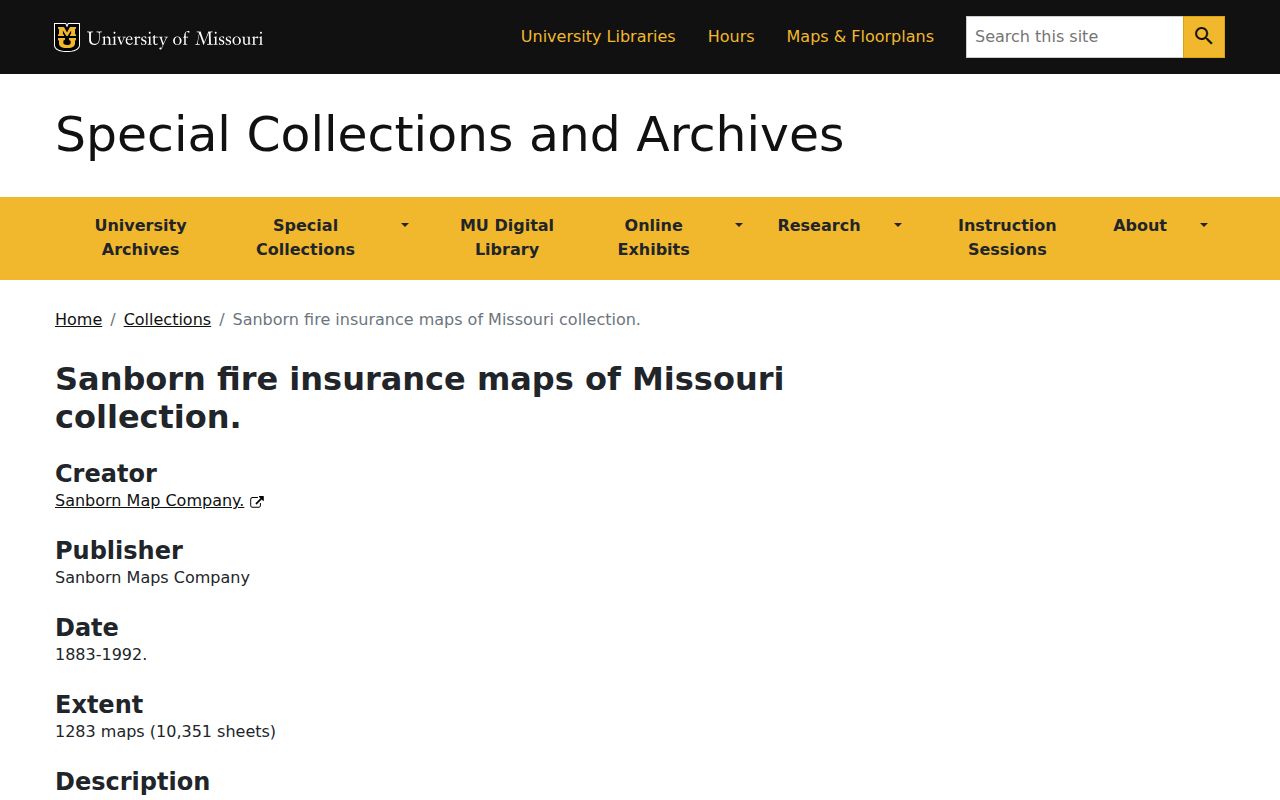
A map can show building use, material, footprint, water features, and street labels. It does not identify every occupant, so it belongs beside, not in place of, the printed directory entry.
Columbia Directory Shelf Fallbacks
When the needed issue is absent from DBRL, move through the local collection network. CoMo Preservation keeps local address directories, telephone books, obituaries from 1938 through 1965, atlases, cemetery material, and other house-history sources. The Columbia and Boone County History & Culture Center at 3801 Ponderosa Street has a research and genealogy library, archives, and a Digital Imaging Lab. Its research library schedule in the research materials is Thursday through Saturday, noon to four, with a small research-help fee noted by the center.
Newspapers can fill a dated gap if the search starts with a known event or date. DBRL's Columbia Tribune microfilm begins in September 1901 and reaches to within the past year, and staff may perform limited searching for a specific date or death. There is no comprehensive obituary index, so a death place, funeral home, relative name, or approximate date makes the request more useful.
The History Center reports early county records beginning in 1821 and a Digital Imaging Lab working with historic photographs and county material. Its collection figures, including 341,695 historic photos, show the scale of the local archive, but they are not a count of people in Columbia. For a directory question, request a specific volume, date, or address and distinguish a catalog description from a page that has actually been examined.
Columbia's Selective Digitization Story
Columbia's historical material is becoming easier to discover, but access is uneven. A 2025 local report described DBRL digitization of nearly a century of yearbooks, rare photographs, and zines, with future OCR work discussed. That work does not create a confirmed, complete online set of Columbia directory volumes. Older source formats still require a physical volume, microfilm, an archive request, or a library visit.
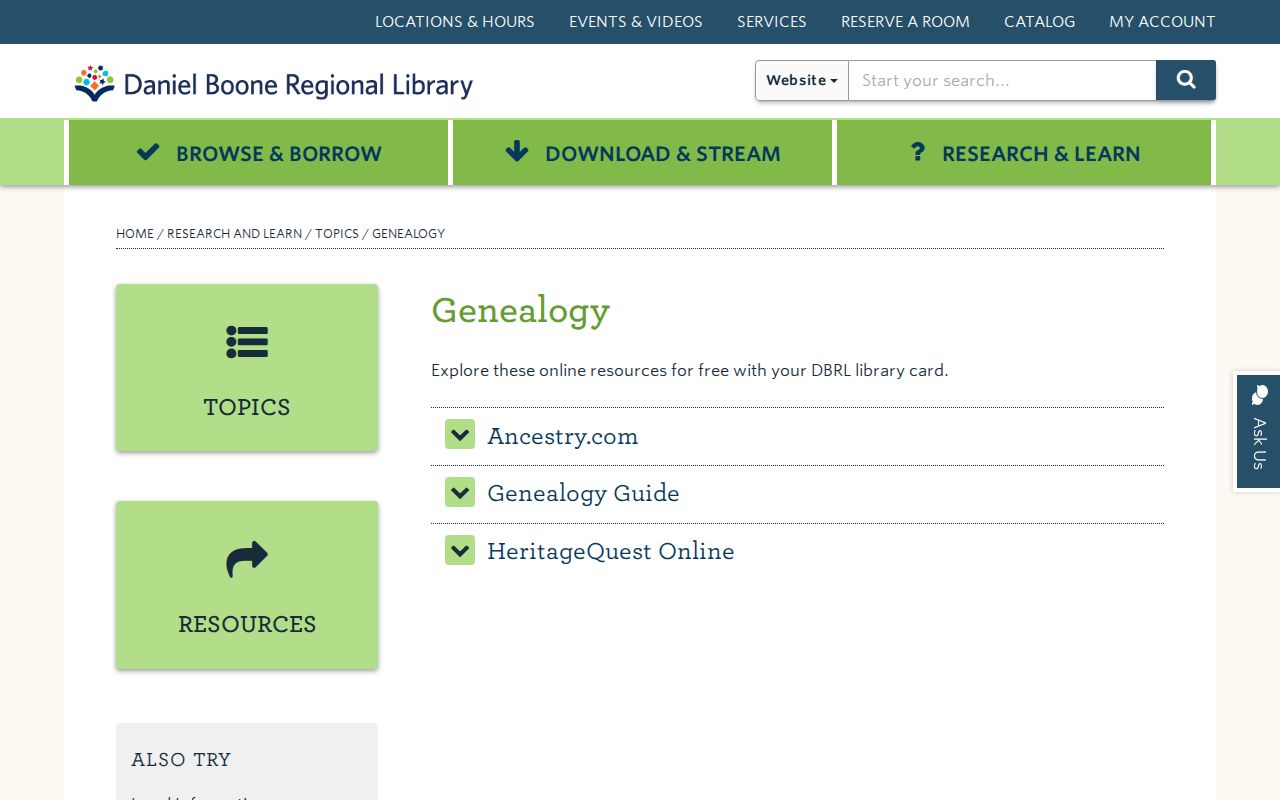
The DBRL genealogy page is a starting point for the library's research channels.
Keep a research log that separates a scanned image, a printed volume, a catalog description, and a modern transcription. The source format often explains an abbreviation, a spelling difference, or a missing field.